Tuesday, 15 September 2015

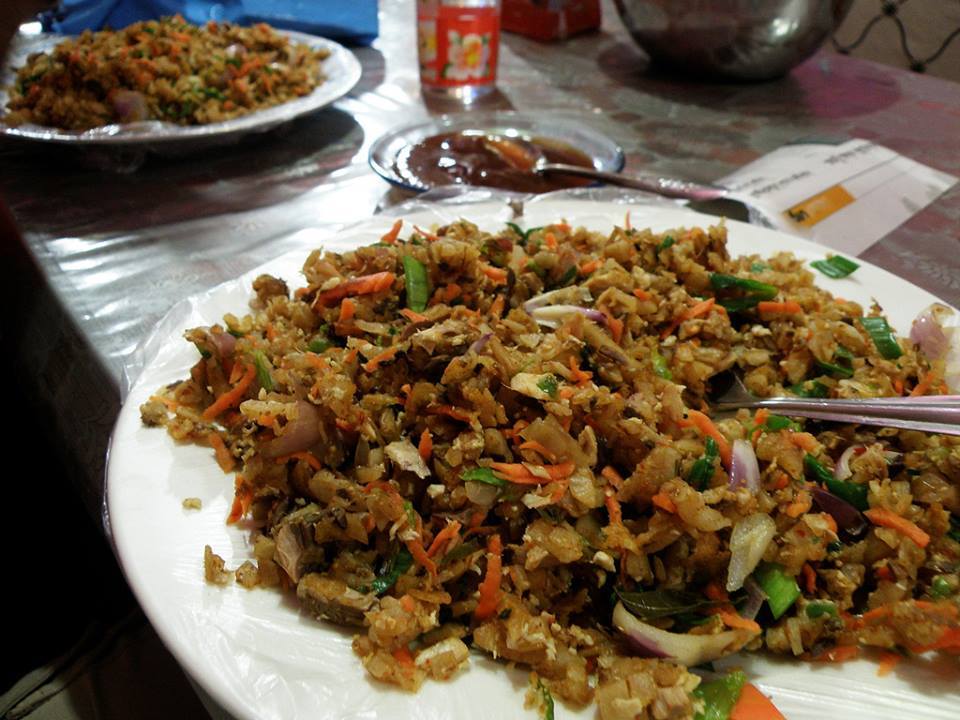
Take a can of Jack fruit and cook it three ways.....

One of the followers of my facebook page asked me what he can do with a can of Jackfruit (polos). He spoke about the polos curry his Amma made which made me nostalgic and his enthusiasm about finding a couple of cans of Polos in an Asian shop was so refreshing.

I was thinking of how excited I used to feel when I found a Sri Lankan vegetable such as Bandakka or thalana batu when I first moved overseas. Once I paid an exorbitant $32 a kilo for a handful of Thibbatu just out of that nostalgia and made a mallun out of it and ate it with rice with so much glee.

So in response to your request, my dear brother from Saudi Arabia, I have come up with three recipes for you to cook using canned Polos.


Polos curry - Jackfruit curry

1 can jackfruit
1 large onion chopped finely
4 cloves of garlic and 1 inch piece of ginger crushed together
a few green chillies
1 tsp curry powder
half tsp turmeric powder
salt to taste
1 tsp chilli powder
1 can coconut milk
a few curry leaves - dried is fine
a few pieces of Rampe (dried, frozen - its called Pandan leaves and is found frozen in Asian shops)
a couple of pieces of goraka (if you cant find it, just use some lemon juice after cooking or cut up
tomatoes to add the sourness)

Drain the jackfruit from can. Wash and drain well.

1. Saute the onions, green chillies and curry leaves in a little oil over medium heat. 
2. Add the ginger garlic paste and the curry powder, turmeric and chilli powder. Stir for a few seconds.
3. Add about 1/4 of the coconut milk and half a cup of water and bring to the boil. Add the goraka and the jackfruit pieces.
4 Cover and simmer on very low heat for about half an hour. Uncover, add the rest of the thick coconut milk and cook until its done.

If you have a slow cooker you can make a wonderfully tender curry using it. Just follow the instructions from 1-2. Transfer the contents to slow cooker and all the ingredients except water and cook on slow for about 4-5 hours.

Polos Mallun - Jackfruit with coconut

1 can Polos
1 red onion chopped very finely
a few curry leaves
a few green chillies sliced
3 cloves garlic
half tsp mustard seeds or mustard powder
half tsp ground black pepper
half tsp salt
a few pieces goraka
half tsp turmeric
half tsp unroasted curry powder
half a cup of dessicated or grated coconut

Drain the polos and wash it and drain it well. Cut into very tiny pieces.

Place the polos pieces, curry leaves, goraka and a little turmeric. Sprinkle a little water and add some salt. Cover and cook for about 10 minutes.

Meanwhile grind the onion, garlic, green chilli, mustard seeds and black pepper with salt and add the coconut and grind well. Don't add any water. Use a food processor or a mortar and pestle to do this,

Once the polos is cooked, add the coconut mixture and stir well using a fork or chop stick. Cook on very low heat. Add some lemon or lime juice if you don't use goraka.


Polos achcharu - Jackfruit pickle

1 can jackfruit
100 gms small red onions (shallots) or a red onion if you cannot get shallots
a few fresh green chillies whole
1 cup white vinegar
half a tsp turmeric
1 tsp salt
1 tsp chilli powder
1 tsp ground mustard


Wash and drain the Jackfruit and cut into small pieces (about 1 cm) not as tiny as for the mallun. Drain on kitchen paper for a few minutes.
Peel shallots or cut onion into small pieces the same size as polos. Make a slit in each green chillie but don't slice through. Dry with kitchen paper and keep aside.

Heat the vinegar in a stainless steel pot or clay pot Add the turmeric, chilli, mustard powders and salt, Bring to the boil. Add the onions, chillies and polos and stir well  Take it off the heat and pour into a glass bottle which has been sterilised and dried.  Leave overnight before using. Keeps in fridge for a few weeks.

Friday, 4 September 2015

Easy to make Milk Rice (Kiribath) in a rice cooker

Kiri bath literally translated is milk rice and is Sri Lanka's most famous festive dish without any debate.

The prominence of milk rice eaten at auspicious occasions may go back to the story of it being offered to Lord Buddha whose first meal after enlightenment was Kiri pidu offered to him by a village damsel called Sujatha. The venue of this is still a much visited stop by Sri Lankan Buddhist pilgrims to India.

Kiri bath is usually the first food fed to babies, is cooked at the auspicious time on New Years day to be the star of the New Year table; offered as Buddha pooja to Lord Buddha; fed by bridegrooms to brides at their wedding, a must at any auspicious event; even cooked on the first day of every month to bring luck which was a custom my mother and her mother before her practiced till their deaths and which I tend to follow - if I am not too busy to forget it even after living out of Sri Lanka for almost 4 decades.

Kiribath for breakfast fit for royalty with Fish Ambul Thiyal and Katta Sambal


Milk rice is similar and yet is different to the coconut rice served in other parts of Asia. It is not cooked in coconut milk from the beginning as coconut rice is and is moulded and flattened. It is one of the simplest dishes to make and is usually a major hit with my non Sri Lankan friends.

Milk rice is usually a breakfast dish but there is no reason why you cannot eat it for lunch or dinner as I do.

We Lankans eat Kiri bath with an assortment of side dishes such as seeni sambol (a kind of caramelised onion spiced with chilli, spices and cooked in tamarind and coconut milk with a little sugar added to it for that extra touch), Katta sambal or lunu miris, a hot concoction of ground salt, onion, chilli and Maldive fish (see my blog post on Katta Sambal), fish or meat curry or my favourite canned fish or Salmon curry. A sweeter version of Kiri bath is made by forming balls of milk rice moulded using either a tea cup or banana leaf to balls slightly elongated on both ends and with a sweet filling of Pani pol, cooked spicy filling made out of grated coconut and treacle or jaggery. Traditionally a bark from the Arecanut tree (puwak kola patha) was used for this but I don't know if they even exist now.
A diamond of Kiribath served with Katta sambal and fish Ambul Thiyal
 

I have recently modernised this dish by making Imbul kiribath stacks made with disks of milk rice with a layer of Pani pol in between. You can also make a savoury version using Katta sambal as a filling and that's the topic of another blog post when I get around to making them.

Now for my recipe for making it with or without a rice cooker.

A plate of Kiribath
 

Rice cooker version

Ingredients:
2 cups short grain, jasmine or Kiribath rice or even sushi rice (which are stickier versions of rice)
3 cups of water
1.5 cups thick canned coconut milk or coconut cream
1.5 tsp salt

Wash rice. Drain. Add the water and cook till done. Then add the coconut milk and salt and switch on back to Cook and cook till the milk is absorbed.

Spoon into a flat plate quickly and flatten out with the back of a spoon and shape  to form a flat raised mound, flattening the tops and sides alternately using either a banana leaf/folded piece of foil or wax paper. Cool and cut into squares or diamonds.

Serve with an assortment of side dishes such as Katta sambal, seeni sambal, fish or meat curry.

Stove top version

Ingredients:
2 cups short grain, jasmine or Kiribath rice or even sushi rice (which are stickier versions of rice)
3 cups of water
1.5 cups thick canned coconut milk or coconut cream
1.5 tsp salt

Wash rice well and place in saucepan with the water. Bring the water to the boil and cook rapidly till most of the water evaporates. Lower heat to very low and cover saucepan with lid and cook on very low heat for about 10 mts without opening the lid and the temptation to peek. Rice should be almost cooked.
Add the salt and coconut milk and cover and cook on low heat till cooked. Use the same method to flatten the rice on a plate.

Monday, 31 August 2015

Katta sambal/lunu miris. chilli sambal or Sri Lankan dynamite

My mother or her trustworthy Kussi amma (literally translated as Kitchen Mother or maid) would have laughed their heads off if they saw me publishing a for a very common Sri Lankan dish - Katta sambola or Katta sambal.


My home made Katta Sambal


A woman who couldn't make a simple Katta sambal would not be considered to be a woman in their book I guess.


Various brands of Katta sambal available for sale to us now

If you ask any Kussi Amma worth her salt or any village housewife or even a young girl in a village, they would tell you how to make a decent Katta Sambal, a ground concoction made with a couple of red onions, salt, fresh chillies and with the addition with Maldive fish or Umbalakada, ground on a grinding stone and mixed with a little lime juice.

Katta sambal is served with rice, rotis, hoppers or Aappa or eaten with bread. It is a food of the humble poor man. Rice and sambal is meant to be the ultimate poor man's meal.

I craved for a decent Katta sambal when I moved out of Sri Lanka. However, I lived in a place where there were no grinding stones, no hot chillies and certainly no Maldive fish. My parents used to send me care packages of Sri Lankan spices and ones I received a small packet of Maldive fish and I managed to mix it up with sliced white onion, a bit of chilli powder sent from home, ground on a stolen mortar and pestle from the Chemistry laboratory at university and added some lemon juice and made my first sambal. Many years later I still remember how it tasted with some kiribath (milk rice) I made with fresh milk eaten with a few friends in my student hostel.

Living overseas now is not as lonesome as it was when I moved out of Sri Lanka in my late teens. Now I can buy most Sri Lankan food at one of three Sri Lankan shops in Auckland and even in my local Indian shops. One day, a lady in my local Sri Lankan shop was telling me how she marvelled at a nice white man who comes to her shop and calls her auntie and buys bottles of Katta sambal among other things. When she tried to tell him that it was really hot, he had said that he can eat hot food as his mother in law cooks Sri Lankan food. On questioning him, she found that the young white man was my son in law who has a penchant for Katta sambal who even keeps a bottle at work to eat with his lunchtime sandwich.

I still like to make my Katta sambal at home although I can easily buy it over the counter mainly as I don't like anything with preservative in it. All the brands of Katta sambal contains "preservative" but I don't know if it is natural, manmade or unnatural. So despite the other half and son and heir wagging their heads and rolling eyes skyward and wonder why I cannot buy this delicacy like other normal people, I continue to make my own Katta sambal which they devour without hesitation by the bottle.

The other day, a few people who tasted my Katta sambal wanted to know where I bought it so decided to share the recipe particularly for those like me who may be out of their homeland and are craving for Sri Lankan food.

I use the food processor to make my Katta sambal and it is really easy. Here is the recipe.

1 medium red onion chopped roughly
2 tsps. salt
10 tsps. chilli pieces or keli miris
5 tsps. Maldive fish flakes
juice of a small lime or half a lemon

Process the salt and red onion for a  few seconds, add the chilli pieces and process for a couple of minutes.

Lastly add the Maldive fish flakes and process until well mixed and you cannot see the chilli seeds. Lastly add the lime juice and mix.
Store in a dry bottle and keep in fridge.
Makes one jam jar.

Should last for a couple of weeks in fridge.

Hint: - if Maldive fish is not available, you can substitute dried prawns  which you can buy in Asian grocery shops but it alters the taste.

If you don't have a food processor, you can make it with a mortar and pestle with a lot more elbow grease.
 

Sunday, 16 August 2015

Koththu roti - Ammi's version of it

Koththu roti - photo credit Pearl of Indian Ocean - Ceylon Facebook page with permission

 
Koththu roti is a very common Sri Lankan food which is made using chopped up Godamba rotis (thin flour based roti tissues) chopped up finely, a handful of vegetables, fish, chicken or meat and the addition of an egg or two and a few sauces.  It has its origins in Malaysia I am sure as Godamba rotis are a version of the Malaysian roti tissue. However, it is now a Sri Lankan dish and we all love it.

Makinng Godamba rotis and then making Koththu is the correct way to do it but I don't have the time nor the patience to do it. So I have derived the easy or the cheat's way to do it.

I use wraps from the supermarket as a fair substitute. The thinner the wraps are, the better. I also don't own one of those metal trays that are traditionally used to make koththu which makes the Koththu sounds when the Koththu cooks make a racket with two cutters that they use to mix everything up.

Traditional way to make Koththu - Photo credit Pearl of the Indian Ocean - Ceylon (with permission)
 
I use my faithful wok to create koththu and although the sound is missing, normally when I make koththu, not a morsel will be left over with my family and friends.

This is my trusted recipe to make Koththu Roti at home especially if you live outside of Sri Lanka and have no access to buying Godamba rotis.

These days, we are able to buy Godamba rotis in packets of 4 or 5 for about $5 in Auckland shops. We even have a Roti Hut opened by a Sri Lankan but not everyone may have access to it as we did a few years ago.

Ingredients:

Serves 4-6

4-6 wraps (the kind that are used to make rolled wraps), cut them into fine pieces with kitchen scissors (about 1" (3 cm) in length and 1/4 " 1 cm) in width or as fine as you can or if you can find them 5-6 plain godamba rotis cut into pieces

2 boiled potatoes, cut into small cubes
2 boiled carrots, cut into small cubes
1 leek chopped finely
1 red and 1 green capsicum or banana chillies (maalu miris) if you can get them, cut into long strips
a handful of cabbage leaves cut finely
1-2 tomatoes chopped
2 red or white onions, sliced finely
3-4 green chillies sliced
a handful of curry leaves
4 cloves of garlic, crushed
1 small piece of ginger, peeled and grated or crushed
Cooked chicken/ beef or fish (you can use left over curry as I do, cut into bite sized pieces)
4 eggs, whisked lightly and seasoned with salt and pepper
a choice of any sauces that you have : tomato/chilli/soy/fish/Worcester sauce
about 3 tbsps. oil + an additional 1 tbsp.
salt, ground black pepper and chili powder to taste (about 1 tsp each if you must want exactly quantities)


Method:

Heat oil in wok and swirl around to cover the sides. When hot, add the curry leaves and the onions and green chillies and sauté for a minute. Add the ginger garlic pastes, and stir fry till the onion is transparent but not brown. Then add the leeks and stir fry for another minute and then the other vegetables and fry on high heat for a minute or so. Add the potatoes and carrots and then the chopped up wraps or roti pieces. Lastly add the tomatoes. Stir fry using two spoons or fish slices quickly. Add the fish or meat or omit it for vegetarian koththu.

Make a space in the centre of the wok and pour the extra 1 tbsp. oil into this. Let it heat for a few seconds.  Add the eggs into this space and quickly stir fry to lightly scramble egg. Then mix it all up and season with any sauces and check seasoning. Add more salt, chili powder and pepper if you want more spice.

Serve immediately and enjoy.

Ammi's tips:
  • I serve it as dinner but you can use it as a snack or a weekend lunch. Left overs, if any, make a lovely lunchbox.
  • There are no hard and fast rules about the vegetables you use. Use whatever is in your fridge. Its a great dish to use those odds and ends in the vegetable compartment of a fridge. I have used mushrooms, courgettes, beans, tomatoes etc. with great results.
  • If you are using just bland  cooked meat, add a spoon of curry powder
  • Usually when I buy a packet of wraps usually one or two could be left over. If this happens, I chop it up and put into a freezer bag and use frozen bits of wraps for koththu on days when I don't feel like doing much cooking.


Sunday, 9 August 2015

An easy Sri Lankan dinner menu


Some of my foodie friends who are non Sri Lankan often ask me for recipes for a dinner party menu.

The other day, I had to whip up a Sri Lankan dinner party at short notice for a group of non Sri Lankan friends last week. Since I only had a couple of days to do it, I decided to make the first of my lists to project manage the dinner party to make it easier for anyone so decided to post it on my blog.


As I love making lists and keep on ticking off lists as I go, I tend to not stress too much about entertaining as I used to when I first started cooking. I have not given the recipes for Fish cutlets and Wades here as I made them separately and froze them but am happy to do another blog on SL street food at some point

I hope this blog post will help anyone who is keen to try their hand at Sri Lankan cooking to create a great dinner menu for a group of up to about 8-10.

This is only a sample and I created it to accommodate meat eaters, pescatarian and vegetarian guests.

List 1: my menu

Snacks:

Fish cutlets, Wade (little lentil balls), Spiced cashews (recipes for these will not be given here but I will do another blog post on SL street food shortly)

Main menu:

Sri Lankan style vegetable fried rice

Sri Lankan chicken curry

Cashew curry

Seer fish in vinegar and mustard sauce ( thora maalu thel vinakiri)

Mushroom and green bean dry curry

Mixed salad

Poppadum

Desserts: individual crème caramels and Marie biscuit pudding'

My recipes

Sri Lankan style vegetable fried rice


Ingredients:

5 cups Basmati rice, washed, soaked in water for 15 mts and drained for 15 mts]

6 cups vegetable stock or water

1 small onion chopped finely

1 tsp garlic and ginger paste

1 large carrot peeled and cut into thin matchsticks

1 leek, green part only, cut into thin matchsticks

2 eggs

a handful of green peas, thawed

a large knob of butter

2 tsp oil

a few curry leaves

Method:

Heat  half of the oil and butter in a large wok or fry pan Sauté the curry leaves and then add the onions. Stir fry till onions are translucent.  Add the drained rice and stir fry over low heat for another 5 mts. Add the stock or water and cook, either in a rice cooker if you have one or on the stove, on high heat until most of the water evaporates. Then cover and lower the heat to very low and cook covered and without peeking for another 15 mts or till rice is done. Leave to cool.

Heat the rest of the oil and butter in wok. Then add the ginger garlic paste and fry for a few seconds and add the finely cut carrots and leeks and stir fry. Add the peas. Then add the cold rice and stir fry till combined. Make a thin omelette with the two eggs and salt and pepper. Cut into thin strips and decorate the rice with it.

Sri Lankan chicken curry


Ingredients:

Chicken thighs cut into two or three if they are large

for the marinade:

    1 tsp chilli powder

    2 tsps. roasted Sri Lankan curry powder

    1 tsp ground black pepper

    1 tsp salt

    a few cloves

    a few cardamom seeds

    a piece of cinnamon

    2 tsp ginger garlic paste

one large or two small onions, chopped finely

two pieces of pandan leaves (rampe)

a few curry leaves

2 tbsp. cooking oil

half a cup coconut milk

2 tbsps. tamarind pulp

Method:

Mix in the marinade ingredients and coat the chicken well. Cover and marinade for a few hours or overnight.

Heat the oil in a large saucepan and sauté the curry leaves in it. Add the onions and sauté till they change light and translucent. Then add the chicken pieces and stir fry on high heat till meat is sealed. Lower heat; add the rest of the ingredients except coconut milk and tamarind, cover and cook for 15 mts. Add the coconut milk and tamarind and stir well. Cook for another 5 mts on low heat.

Cashew curry

 
Cashew curry


Ingredients:

400 g raw cashews

2 medium onions, chopped finely

3 green chillies, sliced thinly

a few curry leaves

a piece of Pandan leaf (Rampe)

1 tsp turmeric powder

2 tsps. unroasted Sri Lankan Curry Powder

2 tbsps. oil

a piece of Cinnamon bark

salt to taste

a few pieces of Gamboge (Gliricinia Cambodia) or Goraka - optional. You can use lemon juice if you can’t find it

1 cup thin coconut milk (1/3 cup canned coconut milk diluted with 2/3 cups water if you are using canned coconut milk)

1 cup thick coconut milk or coconut cream

Method:

Soak the cashews in boiled very hot water for about an hour. Drain well.

Heat the oil in a large saucepan. Sauté the curry leaves and then the onions till soft but not browned. Add the green chillies and turmeric and mix. Add the curry powder and then the well-drained cashew nuts. Add the Pandan leaf, Gamboge, cinnamon and stir fry for about five minutes. Add the thin coconut milk and bring to the boil. Cover and cook over a very low heat for about 20 mts. Then add the salt and thick coconut milk and cook until thick.

Seer fish in vinegar and mustard sauce ( thora maalu thel vinakiri)

Seer fish in vinegar and mustard sauce Green bean and mushroom dish is on the right
 
Ingredients:

500 gms Seer fish or any white fish such as King Fish (I used Seer from the Sri Lankan shop here)

2 onions sliced into rounds

a  few curry leaves

a couple of pieces of Pandan leaf (Rampe)

a handful of chopped coriander leaves (Cilantro) optional

half a tsp turmeric

1 tsp salt

a few peppercorns

two or three pieces of Gamboge or Goraka (optional)

2 tbsps. white vinegar

1 tsp ground mustard seeds

1 tsp ground black pepper

5 cloves of garlic thinly sliced

a 5 cm piece of ginger grated finely

1 tbsp. oil

half a cup of coconut milk

Method:

Place the fish slices in a saucepan and sprinkle a little water. Add the Pandan, gamboge and curry leaves, turmeric, peppercorns, salt to taste and cook on low heat until the fish is partly cooked. Leave aside

Heat oil in a large frying pan or wok. Add some curry leaves and sauté. Add the onion rings, green chillies and sliced garlic and ginger and stir fry till soft but now brown.  Then add the liquid from the fish and coconut milk and cook until thick. Add the mustard, salt and pepper. Add the fish pieces making sure you don't break them and mix until the fish is nicely coated and done. Serve in a shallow dish with the onion and sauce covering the fish pieces.

Mushroom and green bean dry curry

Ingredients:

500 gms green beans, topped and tailed and cut into two or three pieces

1 onion chopped

150 gms button mushrooms, wiped and sliced thinly

3 green chillies sliced

1 tsp unroasted Sri Lankan curry powder

half tsp turmeric powder

half a cup coconut milk

1 tsp ginger garlic paste

a few curry leaves

2 tbsps. oil

salt to taste

Heat oil in a saucepan. Sauté curry leaves and onion, Add ginger garlic paste and sauté for 1 mt Add the curry powder and turmeric and then the mushrooms. Stir fry for a minute or two and then add the green beans. Cook for about 3 mts and add the coconut milk and salt. Stir fry till the moisture evaporates.

Mixed salad

I used lettuce leaves, chopped cucumber, chopped tomatoes, sliced red onion and olives in a homemade salad dressing using a little lemon juice, salt, pepper, mustard powder, olive oil and sugar to make a simple salad. 

Individual crème caramel puddings


Ingredients:

1 can condensed milk

1.5 cans hot water

8 dessertspoonfuls white sugar for caramel

1 tsp vanilla

4 eggs whisked

In a small saucepan place the sugar and just sufficient water to cover and heat on medium heat until the sugar is just caramelised but not burnt. When it is golden remove from heat and spoon into 8-10 muffin or patty pans and swirl around to coat the bottom. Keep aside.

Preheat oven to 180 deg Place a baking tin of boiling water in the bottom shelf of oven.

Dissolve the condensed milk in hot water and beat into the whisked eggs. Add vanilla and mix. Strain into each muffin cup carefully. Bake in a preheated 180 degrees C oven for about 15 mts until firm. Cool and chill. Unmould onto a serving dish


Marie biscuit pudding  (sorry no photo)

1 packet Marie biscuits. I use Arnotte's in NZ

150 ml thick cream

1 cup castor sugar

4 tbsps. of good quality cocoa powder

3 free range eggs separated

1 tbsp. Kahlua or coffee flavoured liqueur or Brandy

half cup cold milk

Chopped cashews and glace cherry halves to decorate

Place the egg whites in a dry grease free bowl, Add a pinch of salt and whisk till stiff peaks form. Add the caster sugar and beat well until stiff peaks form Add each egg yolk and beat well Add the cocoa and mix in. Whisk the cream till soft peaks form and fold in. Add in the liqueur.

Take a pretty glass dish and quickly soak the biscuits in milk and place a layer of biscuits in the glass dish. Add a layer of the chocolate cream. Repeat layers ending up with a cream layer. Make sure that the biscuits don't get overly soggy. Cover with cling wrap and chill overnight. Just before serving, sprinkle with chopped cashew nuts and a few halved glace cherries

These quantities should serve from 6-8 people.

---------------------------------------------------------------
Other helpful information:
List 2: My Shopping list


List of Ingredients:

Grocery shop

1 kg Basmati rice

400 g raw cashew

8  onions and 2 red onions

A few olives

2 eggs

Chicken thighs

500 g Seer fish or any other white fish steams cut in half if large

coconut milk and coconut cream

1 can condensed milk

7 free range eggs

1 packet Marie biscuits

150 ml thick cream

1 cup castor sugar

4 tbsps. of good quality cocoa powder

1 tbsp. Kahlua or coffee flavoured liqueur or Brandy

Chopped cashews and glace cherry halves to decorate


Vegetable shop or isle

1 large carrot

1 leek

5 cloves of garlic

a 5 cm piece of ginger

500 gms green beans

150 gms button mushroom

Half a head lettuce leaves

1 lebanese cucumber

3 tomatoes

Pantry stapes (check if you have them before buying)

vegetable stock powder

garlic and ginger paste

green peas

Cooking oil

Butter

 ground black pepper

 salt

white sugar

White vinegar

vanilla

milk

Spices: (from a Sri Lankan spice shop)

chilli powder

Sri Lankan curry powder – roasted

Sri Lankan curry powder – un roasted

Ground turmeric

Cloves

 a few cardamom seeds

  Cinnamon

a few pieces of Gamboge (Gliricinia Cambodia) or Goraka or lemon juice if it is not available

Small packet curry leaves or dried curry leaves

A packet of frozen or dried Pandan leaves (rampe)

a handful of chopped coriander leaves (Cilantro) optional

a few peppercorns

1 tsp ground mustard seeds

tamarind pulp or tamarind

100 g green chillies


List 3: My to do's list

Two days before

□  grocery shopping

One day before -

□Marinade chicken pieces

□ peel and cut carrots finely, cut leek leaves into tiny pieces and keep in fridge

□ top and tail beans, wash and cut into pieces and place in fridge

□ peel onions and garlic and keep in fridge in a plastic bag

□ Make caramel puddings and chill

□ Make biscuit pudding and chill

□ make cutlets and chill

day of dinner -

□ Make chicken curry

□ Soak cashews and hour before cooking curry

□ make cashew  curry

□ make fish dish

□ cook rice and let cool

□ cook the beans

□ cut veggies for salad and keep in fridge

□ fry poppadums and put into a plastic bag and tie it up

□ fry rice

□ unmould crème caramels onto serving dish, cover and chill

□ decorate biscuit pudding and chill

□ lay the table

□ fry cutlets and wades and drain